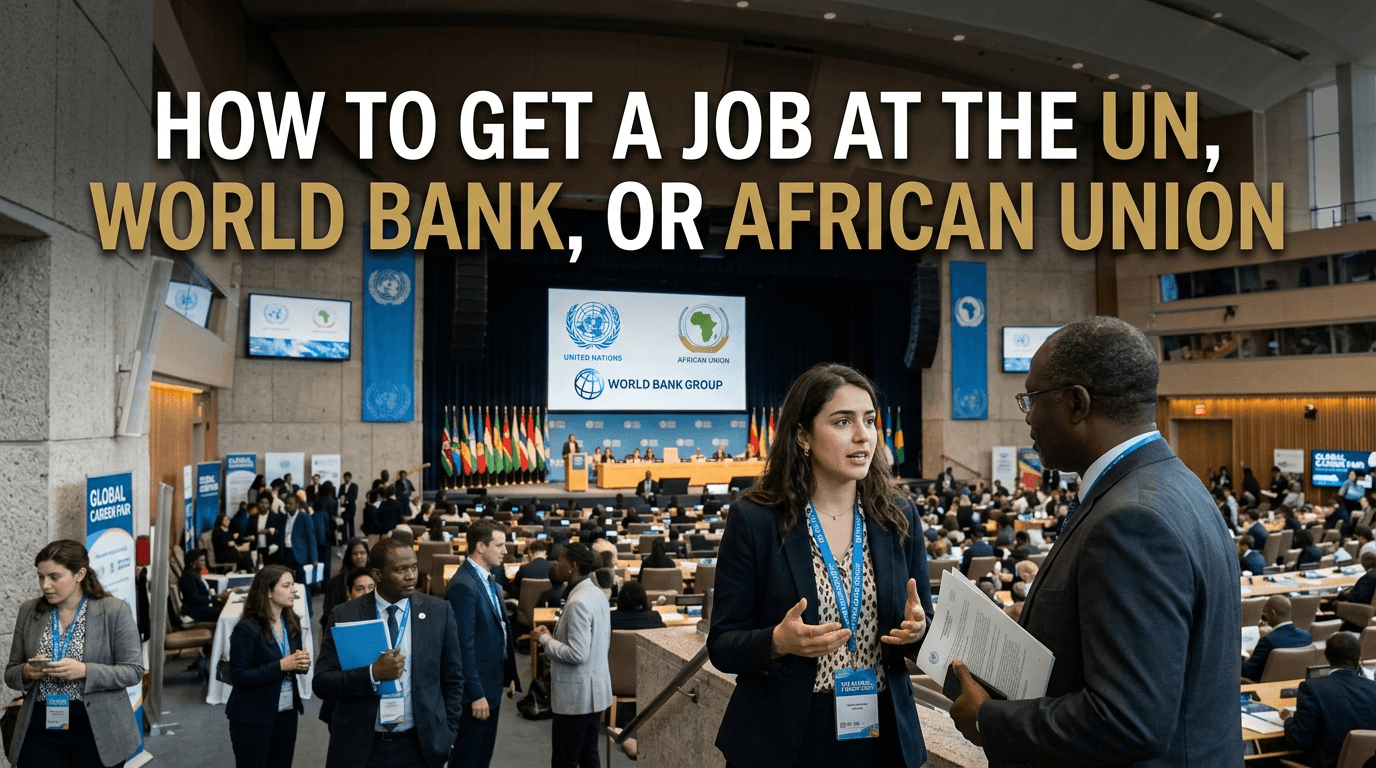

Why Trust This Guide: How to get a job at the UN World Bank African Union
This guide draws on insights from professionals currently working at UNDP, World Bank, ILO, and the African Union Commission, supplemented by analysis of 1,000+ job postings across the major international organization career portals since 2023.
Key Takeaways: How to get a job at the UN World Bank African Union
- The UN Young Professionals Programme (YPP) is the most direct entry point for candidates under 32.
- Most international organization jobs require 2–7 years of relevant experience before your first application.
- Networking with current staff—especially at country offices—dramatically increases interview rates.
- Language skills beyond English (French, Spanish, Arabic) open 3x more opportunities at the UN.
- Consultancy and internship experience within international organizations is often valued more than private sector tenure.
The Truth About Getting Into International Organizations
Here is something most guides will not tell you: the UN, World Bank, and African Union do not primarily recruit through open job postings. The majority of mid-to-senior level positions are filled through internal mobility, rosters, and referrals from trusted networks.
That does not mean external recruitment is impossible—it is how most careers in this space begin. But understanding the full recruitment ecosystem gives you a significant strategic advantage.
Part 1: The United Nations System
Entry Points Into the UN
- UN Internship Programme: 6-month unpaid placements (some stipend-supported) at HQ and country offices. Competitive but accessible for recent graduates.
- UN Volunteers (UNV): Paid volunteer assignments (modest living allowance) that count as professional UN experience and frequently lead to staff positions.
- Junior Professional Officer (JPO): Government-sponsored program where donor countries fund the salary of their nationals for 2-year placements. Ethiopia has bilateral agreements with some OECD donors check current availability.
- Young Professionals Programme (YPP): The flagship competitive exam for candidates under 32. Covers economics, administration, statistics, public information, and other functional areas. Held annually.
- Direct Recruitment (P2/P3 level): Requires 2–5 years of relevant experience. Applications through Inspira (jobs.un.org).
What Matters Most for UN Selection
- Academic qualifications at master's level or above for professional posts
- Demonstrable field experience in developing contexts (not just HQ/capital city work)
- Language skills: English + French is the most valuable combination across UN agencies
- Understanding of the specific agency mandate and relevant global frameworks
- A well-structured Inspira profile that mirrors the job posting language exactly
Part 2: The World Bank Group
The World Bank Career Architecture
The World Bank operates across five entities: IBRD, IDA, IFC, MIGA, and ICSID. Each has different recruitment profiles. For African applicants, the most accessible entry points are:
- Young Professionals Program (YPP): Highly competitive 2-year rotational program for candidates under 32 with a graduate degree and strong quantitative skills. One of the most sought-after development sector programs globally.
- Junior Professional Associates (JPA): 2-year program for candidates with a bachelor's degree and 1–2 years of experience. Based at Washington HQ.
- Short-Term Consultancies (STC): The most common entry point for many World Bank staff. Consultancy contracts—often 3–6 months, renewable—are how many permanent staff begin.
The World Bank Application Strategy
- Tailor each application to the specific country office or sector department
- Emphasize quantitative analysis skills: econometrics, data analysis, project finance
- Publish in recognized development economics journals or policy forums if targeting economist roles
- Engage with World Bank events, reports, and working papers on LinkedIn to build visibility
Part 3: The African Union Commission
Understanding AU Recruitment
The African Union prioritizes African nationals and actively implements geographic distribution policies. This is one context where being African and specifically being from an underrepresented AU member state is genuinely an advantage.
AU Entry Points
- AU Internship Programme: Open to African university students and recent graduates. Hosted at AU Headquarters in Addis Ababa and regional offices.
- AU Staff Positions: Posted on the AU e-recruitment portal. Professional positions at P1–P5 grades.
- Secondment: Some positions are filled by officials seconded from AU member state governments.
What Distinguishes Successful AU Applicants
- Deep knowledge of Agenda 2063 and current AU institutional priorities
- Multilingual capacity across AU official languages
- Previous experience in pan-African institutions, regional bodies, or diplomatic services
- Strong publication or thought leadership record in African policy areas
The Networking Reality
This is the section most guides skip: networking within international organizations is not optional—it is how the system works.
- Attend public events, webinars, and panel discussions hosted by target organizations
- Connect on LinkedIn with staff at the specific department you want to enter
- Request informational interviews—a 20-minute call with a current staff member is worth 50 job applications
- Engage thoughtfully with organizational content: share reports, comment on posts, write analysis
- Join professional associations relevant to your sector (humanitarian logistics, development finance, public health)
Building the Profile That Gets Shortlisted
Based on analysis of shortlisted candidates across all three organizations:
- Education: Master's degree minimum for professional posts. PhD accelerates progression in technical roles.
- Experience: International organizations value breadth—multiple countries and functional areas—over depth in one context.
- Technical skills: Excel/data analysis, project management certification (PMP), and knowledge of Results-Based Management frameworks are highly valued.
- Certifications: PRINCE2, PMP, CIPS (procurement), or CPA add measurable value for operational roles.
People Also Ask on How to get a job at the UN World Bank African Union
How hard is it to get a job at the United Nations?
Extremely competitive for general service and professional positions through open recruitment. Acceptance rates for YPP exams are below 2%. However, entry through internships, UNV placements, and consultancy is more accessible and serves as the primary pipeline for professional staff.
Do I need a master's degree to work at the World Bank?
For Young Professionals Program eligibility and most professional-grade roles, yes. The YPP requires a graduate degree completed within the past three years for most tracks.
Can Ethiopians work at the African Union?
Yes. Ethiopia is an AU member state and Ethiopian nationals actively serve across AU departments. The AU Headquarters is in Addis Ababa, making this one of the most accessible pathways for qualified Ethiopian professionals.
Your Action Plan
- Identify your functional area of expertise (health, economics, logistics, communications, legal)
- Apply for an internship or UNV/AU internship as your immediate first step
- Build your CV to international organization standards
- Develop a second working language at minimum conversational level
- Set up alerts on Inspira, World Bank Careers, and the AU e-recruitment portal
- Begin engaging the professional community on LinkedIn in your target sector
Careers in international organizations are built over years, not secured in a single application. The professionals who succeed combine consistent quality applications with persistent relationship building and genuine expertise in their chosen field.
Read Related Content:
CV vs Resume: What International Organizations Actually Want to See